

Blog
Activities That Stimulate Memory in Alzheimer’s Patients

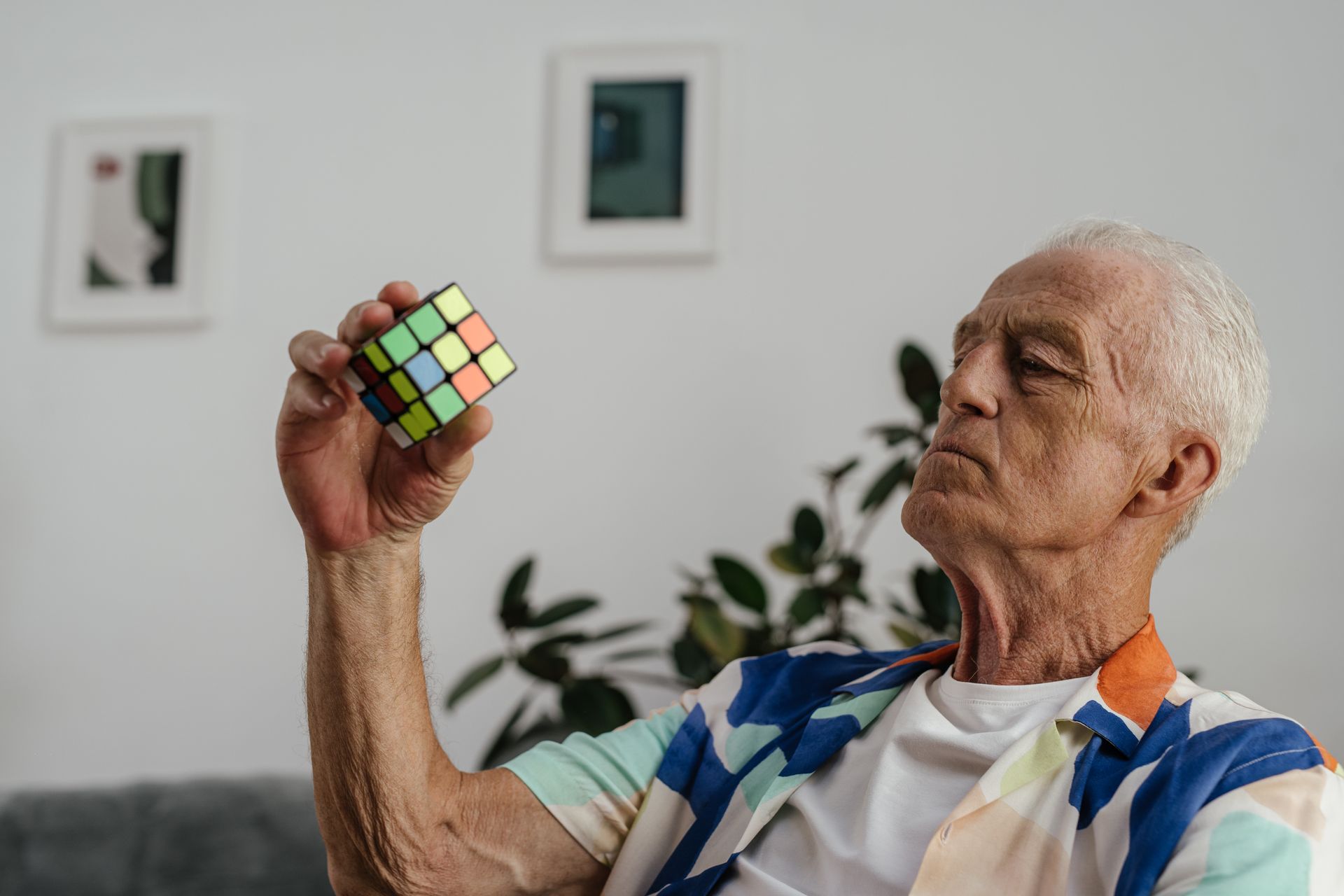
Families often look for activities that stimulate memory in Alzheimer’s patients because they want to keep their loved one mentally active for as long as possible.
Activities cannot reverse Alzheimer’s disease, but familiar and enjoyable experiences may encourage communication, support remaining abilities, provide structure, and create meaningful moments between the person and those around them.
The most effective activities are usually not complicated brain-training exercises. They are activities connected to the person’s interests, memories, skills, and daily life.
Look Through Family Photographs
Family Photographs can provide useful conversation prompts.
Instead of testing the person by repeatedly asking, “Who is this?” allow the experience to be relaxed.
You might say, “Here is the photograph from your old house,” and give the person space to respond.
They may remember a person, place, emotion, or event even when they cannot recall every detail.
Avoid correcting mistakes unless necessary. The purpose is connection rather than testing memory accuracy.
Listen to Familiar Music
Music can remain meaningful even when other forms of memory become difficult.
Songs from adolescence and early adulthood may be particularly familiar.
Create playlists based on the person’s preferences rather than choosing music simply because it is associated with their age group.
Singing, clapping, or gentle movement can make the activity more interactive.
Music may also create opportunities for reminiscence about dancing, family events, religious services, travel, or favourite performers.
Cook Familiar Recipes Together
Food is strongly associated with memory and routine.
A person who once enjoyed cooking may still participate in safe parts of meal preparation.
They might wash vegetables, stir ingredients, shape dough, arrange food, or smell familiar herbs and spices.
The activity should be adapted to their current abilities.
Sharp knives, hot surfaces, and complex cooking tasks may eventually require supervision or modification.
Use Everyday Household Tasks
Purposeful activities can be more engaging than activities that feel artificial.
Folding towels, sorting socks, watering plants, organising photographs, wiping a table, or arranging objects may provide a sense of usefulness.
Someone who spent years caring for a household may recognise these routines even when they no longer remember the steps of more complicated tasks.
Focus on participation rather than perfection.
Explore Art and Creative Activities
Drawing, colouring, painting, working with clay, or simple crafts can provide mental stimulation without relying heavily on verbal memory.
The finished product is less important than the experience.
Avoid complicated instructions.
Prepare materials in advance and demonstrate the first step if needed.
Creative activities can be especially helpful for people who have difficulty expressing themselves through conversation.
Encourage Safe Physical Activity
Movement supports overall health and can also provide mental stimulation.
Walking, gentle stretching, gardening, dancing, or chair exercises may be appropriate depending on the person’s health and mobility.
A healthcare professional can help determine which activities are safe.
Combining movement with familiar music or conversation can make the experience more enjoyable.
Try Reminiscence Activities
Objects from the past can encourage conversation.
Old postcards, household items, clothing, newspaper clippings, tools, photographs, recipes, or souvenirs may prompt memories.
Ask open but simple questions.
“What did you enjoy about this?” may be easier than requesting an exact date or name.
Memory does not always appear as a complete story. A person may recall an emotion, sound, smell, or fragment of an event.
Those responses are still meaningful.
Match the Activity to the Person
Not everyone enjoys puzzles, crafts, music, or group activities.
An activity should reflect the individual’s personality and history.
Someone who disliked gardening throughout life probably will not suddenly enjoy it because they have Alzheimer’s.
Pay attention to signs of fatigue or frustration. Activities should end before they become stressful.
Activities that stimulate memory in Alzheimer’s patients work best when they create connection rather than pressure.
Success is not measured by how many facts the person remembers. It may simply be a smile, a familiar song sung together, a story that briefly returns, or a task completed with confidence.
Those moments can help preserve dignity, encourage participation, and give families meaningful ways to stay connected throughout the course of the disease.